Meet the Partner: UNIMORE, Clinical and Technical Partner of CLUSTREL

Behind the scenes of CLUSTREL, is a team of scientists, technical experts, clinical professionals, and experts from many different fields. Today, we are introducing the University of Modena and Reggio Emilia (UNIMORE), clinical and technical partner of CLUSTREL.
In CLUSTREL, UNIMORE will develop the hardware and software of the prototypes to be tested in vitro and in vivo. It will provide expertise in animal models of seizures and epilepsy and will perform in vitro and in vivo experiments to assess the efficacy and safety of the CLUSTREL drug delivery system, supporting its preclinical validation.
UNIMORE was established in 1998 by merging the University of Modena—founded in 1175 as one of Europe’s oldest universities—with the University of Reggio Emilia. Today, UNIMORE hosts over 30,000 students (including 3,500 postgraduates), 900 faculty members, and 15 PhD schools.
The university comprises 13 departments and two faculties, offering comprehensive degree programs across humanities, engineering, physical sciences, and medicine. As a key driver of the Emilia-Romagna High Technology Network through its local technopoles, UNIMORE features state-of-the-art facilities and numerous internationally recognized research centers active in global collaborations. Located in one of Europe’s wealthiest and most dynamic industrial hubs, UNIMORE benefits from a region world-renowned for automotive engineering (e.g., Ferrari and Maserati), agri-food, ceramic tiles, advanced manufacturing, and high-standard healthcare. National assessments consistently rank UNIMORE among Italy’s top 8 medium-sized universities for research and teaching quality.
Meet the UNIMORE TEAM and Their Role!

Giulia Curia, Professor of Physiology
Giulia obtained her Master’s degree in Biological Sciences and her PhD in Physiology from the University of Milan, Italy. She is an experimental epileptologist with extensive expertise in animal models of seizures and epilepsy. Her research combines electrophysiology with preclinical epilepsy models, spanning investigations of neuronal ion currents, neuronal network activity, and, over the past fifteen years, in vivo video-EEG recordings in the pilocarpine model of temporal lobe epilepsy.
In the CLUSTREL project, she will lead the preclinical evaluation of the CLUSTREL drug delivery device to assess its safety and therapeutic potential.
“I am excited to contribute to a project that bridges academic research and technological innovation, translating scientific discoveries into new therapeutic opportunities for epilepsy.”

Matteo Corradini, University Technician
Matteo obtained his Master's Degree in Computer Engineering from the University of Modena and Reggio Emilia, Italy, followed by several courses in Biomedical Engineering. Throughout his career, he focused on developing biomedical equipment in the fields of neuroscience and physiology, more generally. In 2017, he founded a university spin-off, now known as ippocrat.tech, which has brought to the market a new medical technology for monitoring vitals.
In CLUSTREL he will develop the device that will deliver the medication.
“I am excited to be part of this project so that we can improve the lives of millions of people.”

Alessio Di Clemente, Postdoctoral Researcher
Alessio holds a Bachelor's degree in Biology from Sapienza University of Rome, a Master's degree in Neuroscience from the University of Trieste, and a PhD in Neuroscience and Neurotechnology from the Italian Institute of Technology (IIT), Genoa.
Within CLUSTREL, he will develop and validate in vitro and ex vivo models to test the graphene-based drug delivery device, assess its functionality and biocompatibility, and investigate its effects on neuronal network activity using electrophysiological techniques, including patch-clamp recordings and multielectrode arrays (MEAs).
“I am excited to contribute my expertise to this multidisciplinary project, working alongside engineers and clinicians to develop innovative technologies with the potential to make a real difference in the treatment of epilepsy patients”.

Laura Monni, Postdoctoral Researcher
Laura obtained her Master’s degree in Neuroscience from the University of Trieste and her Ph.D. in Medical Neuroscience from the Charité – Universitätsmedizin Berlin, Germany. Her research background is in neuroscience, with expertise in translational electrophysiology and experimental epilepsy research using human surgical brain tissue and rodent brain slices.
In CLUSTREL she will perform In vitro electrophysiological validation of the graphene-based bioelectronic platform by assessing its effects on neuronal excitability and pathological network activity in ex vivo human and rodent brain models.

Leandro Julian Mele, Postdoctoral Researcher
Leandro obtained the PhD in Industrial Engineering from the University of Udine, following BSc and MSc degrees in Electronic Engineering. He has eight years of experience in the design, modelling and characterization of electrochemical and bioelectronic devices, with recent postdoctoral research at Stanford University (Materials Science and Engineering).
In CLUSTREL, within Work Package 5 (Prototype Development), he will contribute to building the non-invasive oral rescue-medication device, from its microelectronics, firmware, drug reservoir and device integration.
"Having previously worked on ionic neuromodulation for epilepsy, I'm excited to bring that expertise to CLUSTREL and help turn a bold idea into a real device that can interrupt seizure clusters and make a genuine difference for patients."

Beatrice Casadei Garofani, Postdoctoral Researcher
Beatrice holds a PhD in Neuroscience from the University of Modena and Reggio Emilia, following a BSc degree in Biological Sciences and a MSc degree in Experimental and Applied Biology. Her research focuses on preclinical models of epilepsy, with more than five years of experience in in vivo studies, video-EEG recordings, and neurophysiological analyses.
Within the CLUSTREL project, she is responsible for evaluating the in vivo safety of the device by monitoring physiological and vital parameters, contributing to its preclinical validation.
“I'm super excited to be part of CLUSTREL! It's an amazing opportunity to combine neuroscience and nanotechnology, using my expertise to test and validate this non-invasive device to ensure it can really make a difference for people living with epilepsy."

Arianna Capodiferro, PhD Student in Neuroscience
Arianna holds a Bachelor’s in Biotechnology and a Master’s degree in Medical Biotechnology. Before starting her PhD in Neuroscience, she spent two years as a Research Fellow investigating ictal and interictal activity in a preclinical model of temporal lobe epilepsy.
Within the CLUSTREL project, she will evaluate the device in vivo in preclinical models of seizure clusters and status epilepticus, contributing to its preclinical validation.
“I am thrilled to join CLUSTREL because it allows me to bring my background in preclinical epilepsy models, specifically the pilocarpine model, to test an innovative targeted drug delivery system aimed at significantly improving the management of patients with epilepsy."
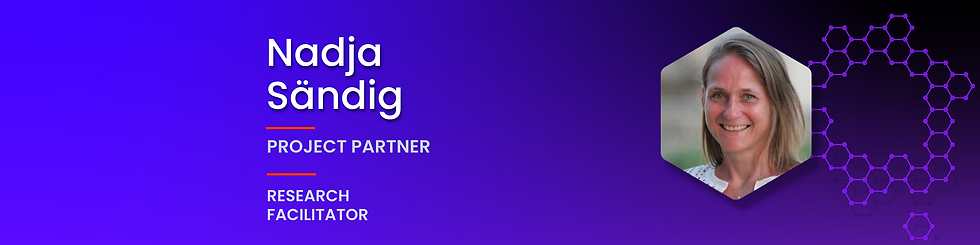
Nadja Sändig, Research Facilitator
Nadja holds a Dr. rer. nat. (Ph.D.) in Chemistry, with a specialization in Theoretical Chemistry obtained from the Technical University of Berlin, Germany.
In the CLUSTREL project, Nadja is the Research Facilitator for the UNIMORE unit: proposal design, management, and dissemination of results of European and international projects.
Stay updated on the CLUSTREL research development and progress by following the project on LinkedIn.


Comments